


What Are Children’s Check-Up Services?
In short, a children’s check-up is a comprehensive health screening in which a child is evaluated from head to toe, even if they do not currently have any health complaints. It is not limited to measuring height and weight; the package also includes a physical examination, assessment of developmental milestones, age-appropriate tests, vaccination schedule review, nutrition, and sleep patterns.
Children grow rapidly, and something that appears normal today may have a different significance six months later. Therefore, a check-up should not be considered a one-time procedure, but rather a series of regular health assessments that accompany the child’s growth and development. The aim is both to detect existing health problems at an early stage and to identify potential future health risks as early as possible.
Why Are Regular Check-Ups Important Even When a Child Is Healthy?
Many families may wonder, “Our child is energetic, eats well, and seems healthy; why should we have a check-up?” This is precisely where the importance of children’s check-up services becomes clear. Many serious health problems may not cause noticeable symptoms when they first develop. Anemia, vitamin D deficiency, certain heart rhythm disorders, vision problems, early-stage hearing loss, or nutrition-related growth delays may often go unnoticed in everyday life.
Routine check-ups help detect health problems before they progress to a more advanced stage. For example, an eye examination may reveal that your child is struggling because they cannot see the board clearly, rather than because they dislike the lesson. Similarly, careful monitoring of height and weight growth charts may help identify early signs of potential growth hormone or thyroid-related problems. Many health issues detected at an early stage can be managed with simpler and shorter treatments.
At What Ages Is a Children’s Check-Up Beneficial?
Routine vaccinations and developmental check-ups are carried out from birth and form the foundation of children’s health. In addition to these routine assessments, more comprehensive <strong>children’s check-up packages</strong> are generally planned for specific age groups. Although this may vary depending on the healthcare center, common periods can be summarized as follows: preschool age (3–6 years), just before starting primary school, pre-adolescence (10–12 years), and mid-adolescence.
During the preschool period, the aim is to evaluate the child’s motor and cognitive development, speech skills, social adaptation, and sensory functions (vision and hearing) in detail. A check-up performed just before starting school is important for identifying factors that may affect academic performance, such as attention difficulties, learning difficulties, and vision problems. During adolescence, growth in height, hormonal balance, nutritional habits, and psychological well-being become the primary areas of focus.
What Is Included in a Children’s Check-Up Package?
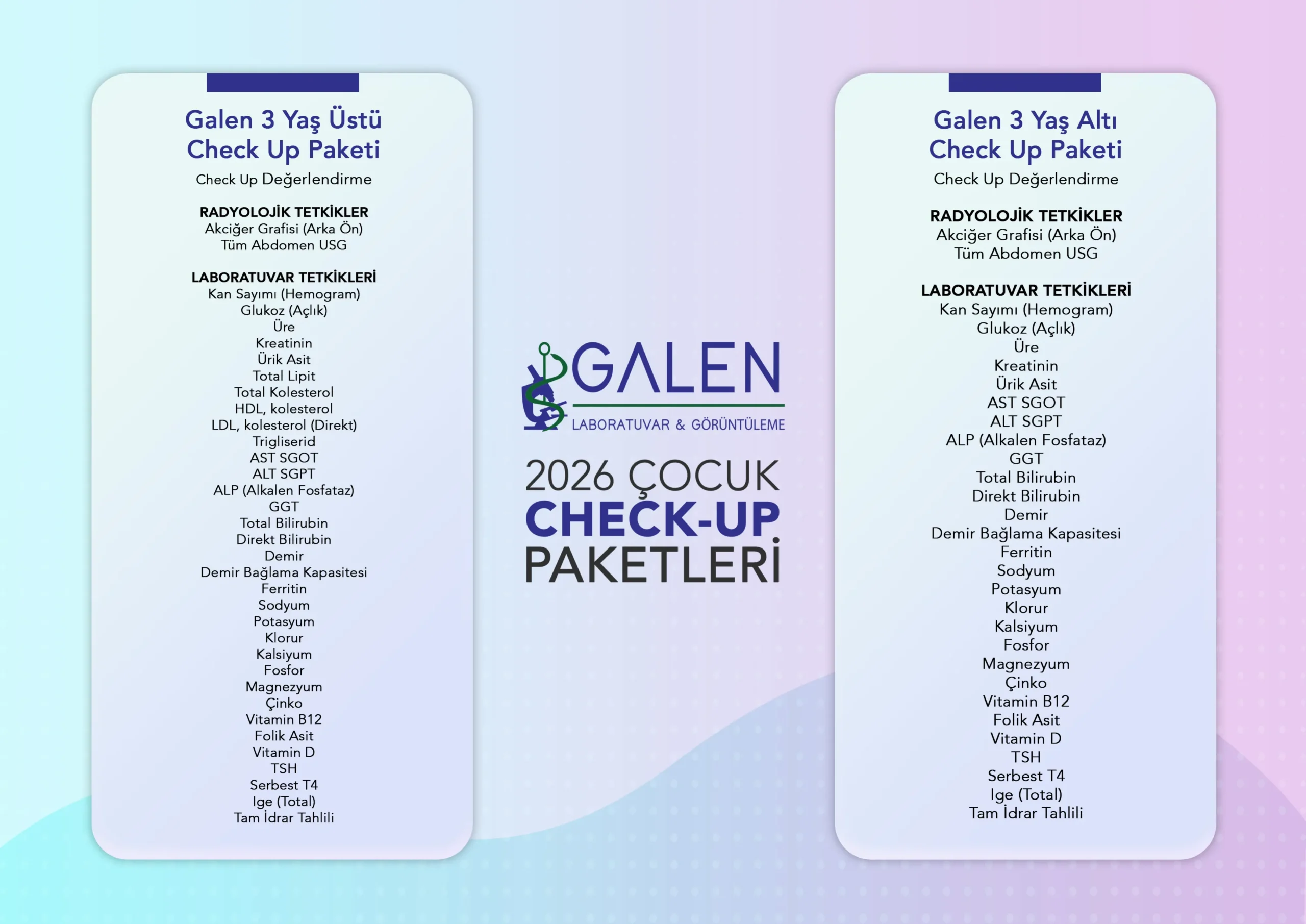
Each hospital or clinic creates its check-up package according to its own facilities and services, so it is not possible to say that the content is “the same everywhere.” However, similar components are generally included. First, a detailed pediatric examination is performed; the child’s medical history from birth to the present day, any previous surgeries, medications used, allergies, and common diseases in the family are discussed.
Next, basic parameters such as height, weight, and head circumference are measured to evaluate the child’s growth curves. Vision and hearing screenings, dental examinations, urinalysis, complete blood count, and blood tests such as iron, vitamin D, and cholesterol are also frequently included in the package. Depending on the child’s age and risk factors, additional examinations such as an ECG, chest X-ray, and ultrasound may also be included. Some healthcare centers also offer consultations with a child psychologist or dietitian as part of the check-up.
Benefits of Children’s Check-Up Services for Families
One of the main advantages of these packages is that you do not have to arrange every examination separately. Many tests and assessments that would normally require separate appointments can be scheduled on the same day in a coordinated manner. This saves time while allowing your child to undergo several complementary health assessments during a single visit.
Another advantage is that families can find systematic answers to smaller concerns they may have. A child’s poor appetite, frequent illnesses, night sweats, fluctuations in school performance, technology use, level of physical activity, and sleep patterns can all be discussed in detail during the check-up. In many cases, these consultations significantly reduce parents’ concerns about whether they might be overlooking something important.
Preparation Before a Children’s Check-Up
For children, the hospital environment is not always a pleasant experience, and some may become particularly anxious when they learn that a blood sample will be taken. Therefore, before the check-up, it can be very helpful to give your child an honest but calm explanation that is appropriate for their age. Instead of making unrealistic promises such as “It won’t hurt at all,” saying, “There will be a quick needle prick. It may hurt a little, but it will be over quickly, and afterward we can go get a little reward together,” is much more realistic and reassuring.
Planning the check-up day as a special day spent together, rather than simply a “hospital day,” can also help your child feel more comfortable. Having a favorite breakfast beforehand, followed by a short visit to the park or a bookstore afterward, can help create a more positive association with the hospital experience. Depending on your child’s age, explaining that the doctor works like a “body detective” who checks how they are growing can also be a fun way to make the process feel more like a game.
Why Is It Important to Choose the Right Healthcare Center and Specialist?
When it comes to children’s check-up services, simply performing tests is not enough; an experienced healthcare team is needed to interpret the results accurately and explain them clearly to the family. Therefore, choosing healthcare centers that are experienced in pediatric health and, where possible, provide child-focused care offers significant advantages. Establishing continuity with a pediatrician your child feels comfortable with also makes it easier to compare current check-up results with previous assessments.
When choosing a healthcare center, it is important to consider not only the price of the package but also its content, the quality and up-to-date technology of the medical equipment used, the laboratory infrastructure, and the follow-up consultation services provided. Some healthcare centers arrange a separate consultation after the check-up to explain each result to the family in detail; this is an important aspect that can significantly enhance the quality of the service.
Frequently Asked Questions
How Often Should a Child Have a Check-Up?
There is no single answer to this question because every child’s needs are different. In general, more frequent check-ups are recommended during the preschool years, while a comprehensive check-up once a year is generally recommended for school-age children. If the child has a chronic condition, a congenital heart problem, allergic asthma, diabetes, or a similar condition, the frequency of check-ups may be adjusted by the physician according to the child’s individual needs.
During the first three years of life, when developmental milestones change very rapidly, children already visit their pediatrician frequently as part of the routine vaccination schedule. Planning some of these appointments as more comprehensive check-ups can make it easier to monitor both the child’s physical and psychological development within the same framework. For older children, comprehensive screening, particularly before starting school and when entering adolescence, can serve as a valuable “health update” to help identify potential problems that may arise in the future.
Which Tests Are Included in a Children’s Check-Up Package?
The following assessments form the basis of children’s check-up services at many healthcare centers:
- Detailed pediatric examination and developmental assessment
- Boy, kilo, baş çevresi ölçümü ve büyüme eğrilerinin yorumlanması
- Complete blood count, iron, vitamin B12, vitamin D, and other basic blood tests
- Cholesterol, blood glucose, and thyroid tests when medically indicated
- Urinalysis and age-appropriate stool examinations
- Visual acuity and fundus examination, and strabismus screening
- Hearing test and ear examination
- Heart and lung assessment, with an ECG or chest X-ray if necessary
- Additional imaging, such as abdominal ultrasound, depending on age and symptoms
- Dental assessment, including evaluation of tooth decay and jaw development
- Dietitian or child development specialist consultation regarding nutrition, sleep, and physical activity
Each healthcare center may adjust this list according to its available facilities and services; the content of the package should be tailored to your child’s individual needs in consultation with your pediatrician.
What Should Be Considered Before a Children’s Check-Up?
- Before the appointment, making a note of any medications your child regularly takes and any significant illnesses they have previously had can make the consultation easier.
- If blood tests are planned, fasting for several hours is usually required; it is important to follow the hospital’s instructions carefully.
- For young children, choosing comfortable clothing that allows them to move freely and is easy to put on and take off can make the examination process more comfortable for both the child and the physician.
- Instead of telling your child at the last minute, “We’re leaving now, we’re going to the hospital,” calmly explaining what will happen a day in advance can help reduce their anxiety.
- If your child has a significant fear of needles or the hospital environment, it is helpful to mention this when making the appointment so that, if necessary, additional time can be allocated or a child-friendly environment can be arranged.
If the Check-Up Results Are Completely Normal, Is Another Check-Up Still Necessary?
Normal results should not be considered a reason to skip future check-ups. Instead, they provide an opportunity to confidently plan the next health assessment. Children’s check-up services should be viewed not as a one-time answer to the question “Is everything okay?” but as regular checkpoints throughout a child’s health journey during the growing years.
Normal results should not be considered a reason to skip future check-ups. Instead, they provide an opportunity to confidently plan the next health assessment. Children’s check-up services should be viewed not as a one-time answer to the question “Is everything okay?” but as regular checkpoints throughout a child’s health journey during the growing years.


